
One of the greatest rewards and challenges in school leadership, whether it be informal or formal is how to affect the learning of others. What learning on the part of the educator will yield the greatest gains for the learners? When can they learn? How should they learn? How will I know if there is change in practice or outlook after the learning?
For me, it comes down to one thing, creating a culture of learning. From the top to the bottom of any educational organization, there has to be a sense of curiosity, a belief that everyone is capable of learning, a way to learn with others and a sense that any learning we do will improve the conditions for learning in our classrooms. It cant seem separate or other, or temporary, it has to be a seamless part of the system.
“Culture guides how we process information. Cultures with a strong oral tradition rely heavily on the brain’s memory and social engagement systems to process new learning. Learning will be more effective if processed using the common cultural learning aids—stories, music, and repetition.”
― Zaretta Lynn Hammond, Culturally Responsive Teaching and The Brain
How do you create the conditions for this culture? My tried and true techniques include;
- Be a curious learner yourself
- role model and
- when small groups are working on an inquiry be present as much as possible,
- especially on learning cycles that have potential for innovation.
- Ask questions and show interest
- Fan the flames
- Encourage with key questions when an idea or wondering comes up; how could you do that, what needs to change, what don’t we know, what would our students say?
- Rather than doing operational items at staff meetings, use them as a chance for ongoing sharing, wondering and collaborative direction setting
- consider the power of sharing and collegial role modelling; try demo slams, goldfish bowls, unconferencing, ideation, and other innovative meeting and learning models
- Celebrate gains and honour the learning that comes from failure (find a few brave staff to share their fails!)
- Provide permissions
- Yes, you can think about that topic, idea or question
- We aren’t there yet, but do some research and bring me ideas on how we could get there
- There is no right answer or wrong question
- Yes, you can learn within the classroom environment
- Your entry point is what it is, start where you are at
- Resource the Learning
- Find the release days for ongoing inquiry
- Networking, connect the educator with the central resources, or resources in other sites
- Reserve dollars for purchasing books, materials, and be transparent around how it is spent
- Be creative in your timetabling and staffing, be willing to alter structures
- Sponsor and organize the occasional ‘big event’, a speaker, a carousel
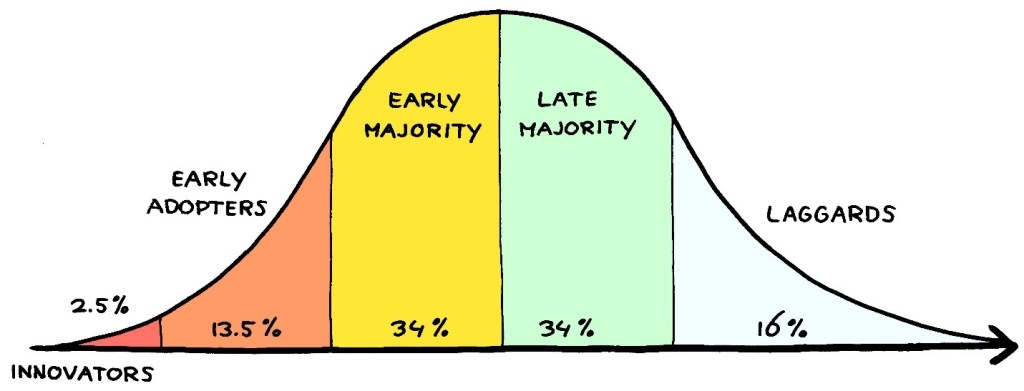
While these methods are tried and true and have worked well over the years, there are a couple of key things to keep in mind; 1. Be prepared for the ‘mundane’. Not every educator will come up with the next great idea to revolutionize the craft of teaching, some will spend time on late slips and classroom management. This is the cost of keeping everyone learning, they don’t all start with the same place you would. My thinking is that my high level of expectation is there for all, and they have to work on what they can influence in their learning, not how the student or system should change (sphere of influence). 2. Always keep the adoption curve in mind, big outcomes can come from your early adopters charging ahead in their learning, and you create the conditions for them to do so. Your leadership is really needed for the early and late majority, remembering as you go that some need to ‘do their way into learning, and some need to learn their way into doing’ (source unknown).
The best part about creating a culture of learning? It fills your cup and keeps your heart, mind and spirit engaged in the core work of our incredible profession; the art and science of teaching!

 The Pensive Principal